Vu Thi Ngan, Dinh Van Dao
Community Development Center, Institute for Water Resources Economics
Vietnam and Australia face growing challenges in managing and using water resources as demand increases alongside socioeconomic development. Uneven water distribution across space and time, saline intrusion, climate change and the management of transboundary river basins create an urgent need to improve water governance. International exchanges, particularly on water accounting and valuation tools, policies and governance models, are therefore of practical significance for Vietnam.
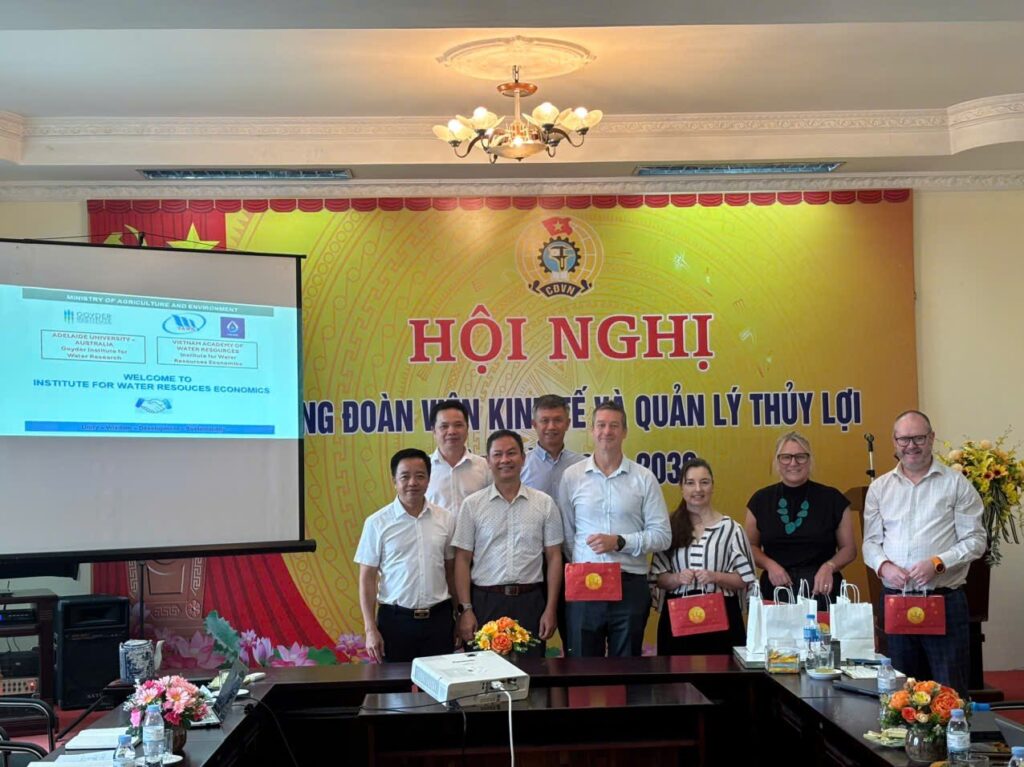
In response, the Institute for Water Resources Economics and the Goyder Institute for Water Research developed a capacity-building programme in water governance, allocation and irrigation. The project is funded by the Australian Government for 2025 and 2026. As part of the programme, an Australian expert delegation led by Dr Alec Rolston, Director of the Goyder Institute, together with Flinders University specialists in economics, policy and water pricing, visited the Institute for Water Resources Economics and the Vietnam Academy for Water Resources from 21 to 25 September 2026. Discussions addressed water accounting, valuation and allocation, shared professional experience and explored future cooperation.
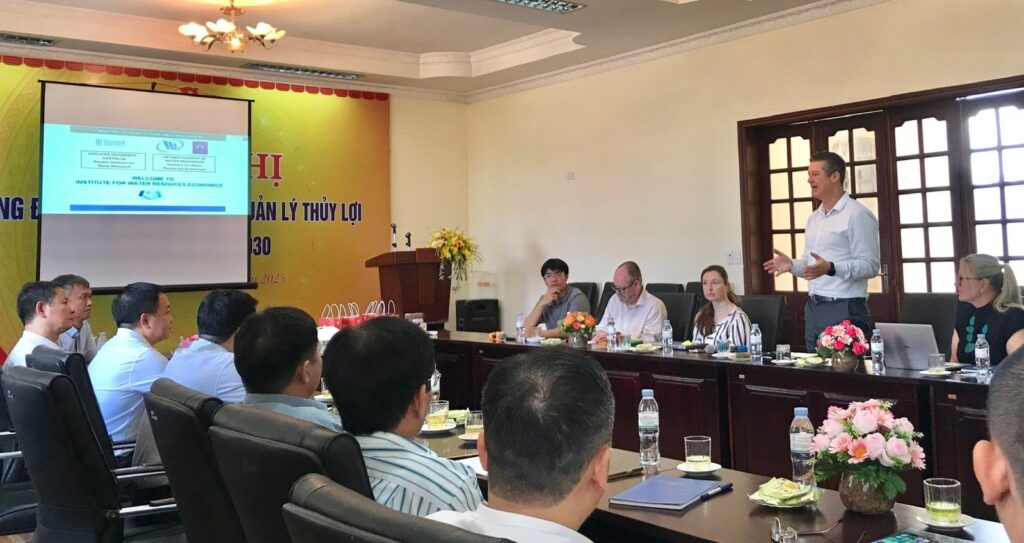
Alec Rolston, Director of the Goyder Institute for Water Research, speaks during the discussions.
Representing the Institute for Water Resources Economics, Deputy Director in Charge Dang Minh Tuyen and the Institute’s experts and researchers outlined Vietnam’s priority challenges. These included water resources accounting, irrigation service and clean water pricing, digital transformation in water governance, climate change, saline intrusion and community governance under the two-tier local government model.
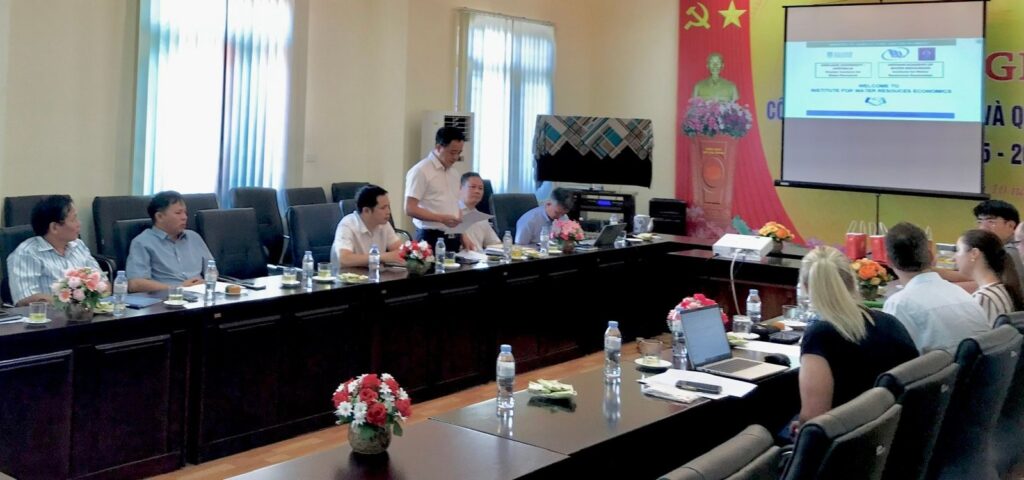
Dang Minh Tuyen, Deputy Director in Charge of the Institute for Water Resources Economics, addresses the discussions.
The delegation shared Australia’s experience in water resources and irrigation system management, including water accounting, valuation and allocation, management arrangements, economic instruments and policy development, and discussed their potential application in Vietnam. These exchanges opened up opportunities for future cooperation.
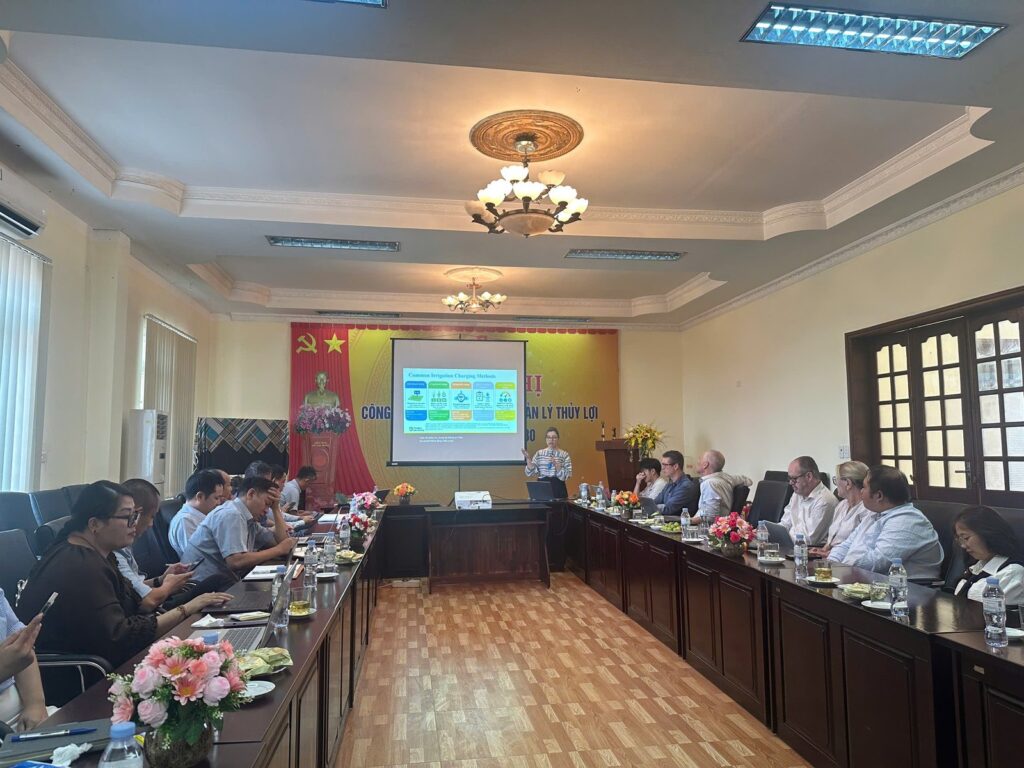
Sarah Wheeler, a specialist in water economics and pricing at Flinders University, Australia, shares Australian experience in developing water pricing mechanisms.
Vietnamese experts described the country’s specific water governance challenges, including dependence on transboundary river flows, uneven water distribution among regions, coastal saline intrusion, pronounced differences between rainy and dry seasons, and increasing climate impacts. Nguyen Le Dung, Director of the Community Development Center, also discussed the current situation of community water user organizations, or local irrigation organizations/WUAs, in Vietnam. He highlighted difficulties concerning financial resources, irrigation infrastructure management and operating costs, and community participation in water management and use. These issues call for further research and improvements to pricing mechanisms and economic instruments that mobilize community participation in more effective water resources and irrigation infrastructure governance.
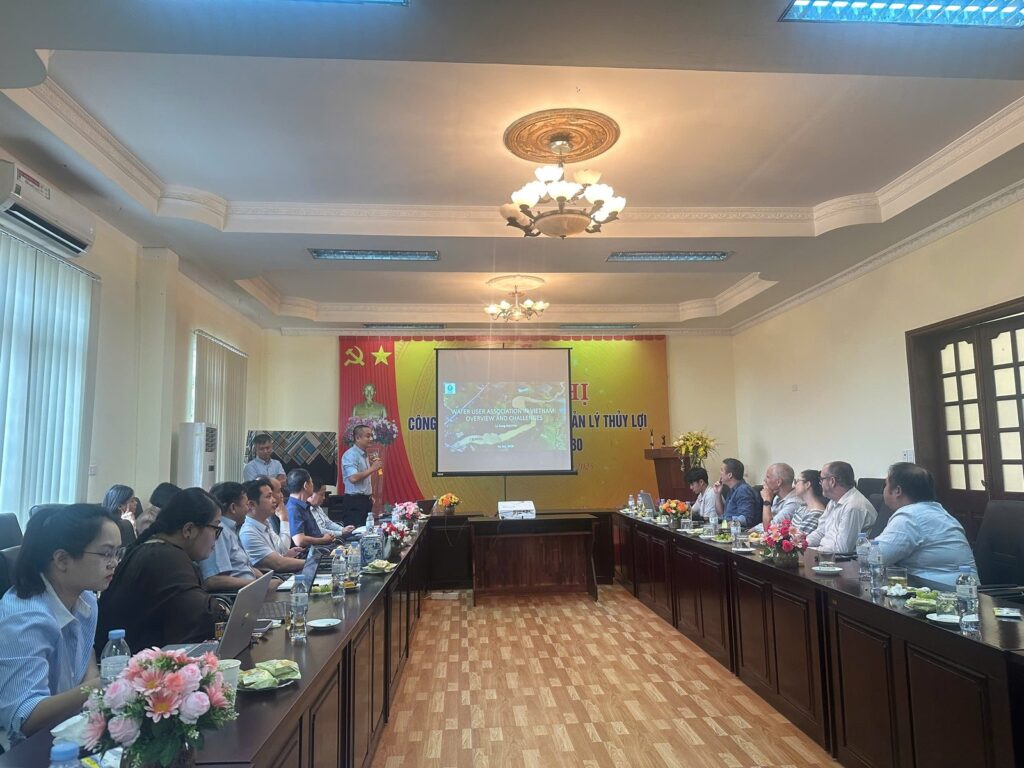
Nguyen Le Dung, Director of the Community Development Center, discusses Vietnam’s water pricing challenges.
To strengthen cooperation, Dr Dinh Van Dao outlined potential joint activities, including training and capacity development, research projects, joint scientific publications, academic exchanges and specialist research groups. Building on these proposals, the two sides will continue developing cooperation and preparing the contents of a Memorandum of Understanding (MoU) to establish more effective collaboration.
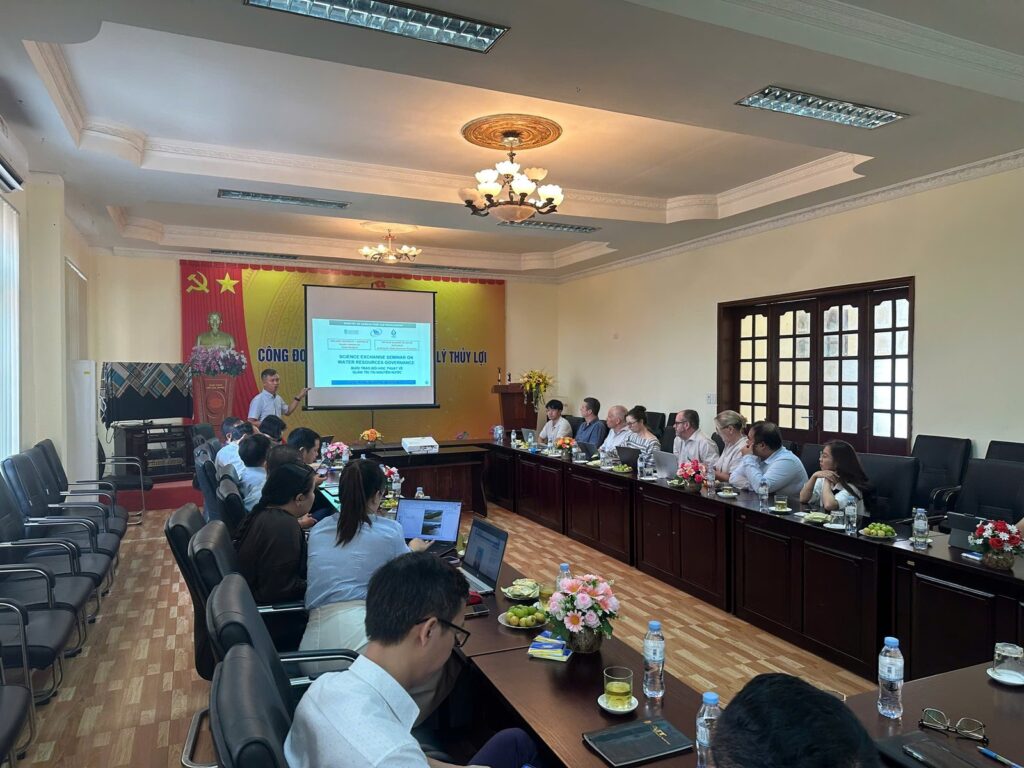
Dinh Van Dao presents potential areas of Australia–Vietnam cooperation.
Following the discussions, the two sides conducted site visits and field surveys to strengthen the connection between professional knowledge and practical infrastructure management and operation in Vietnam.
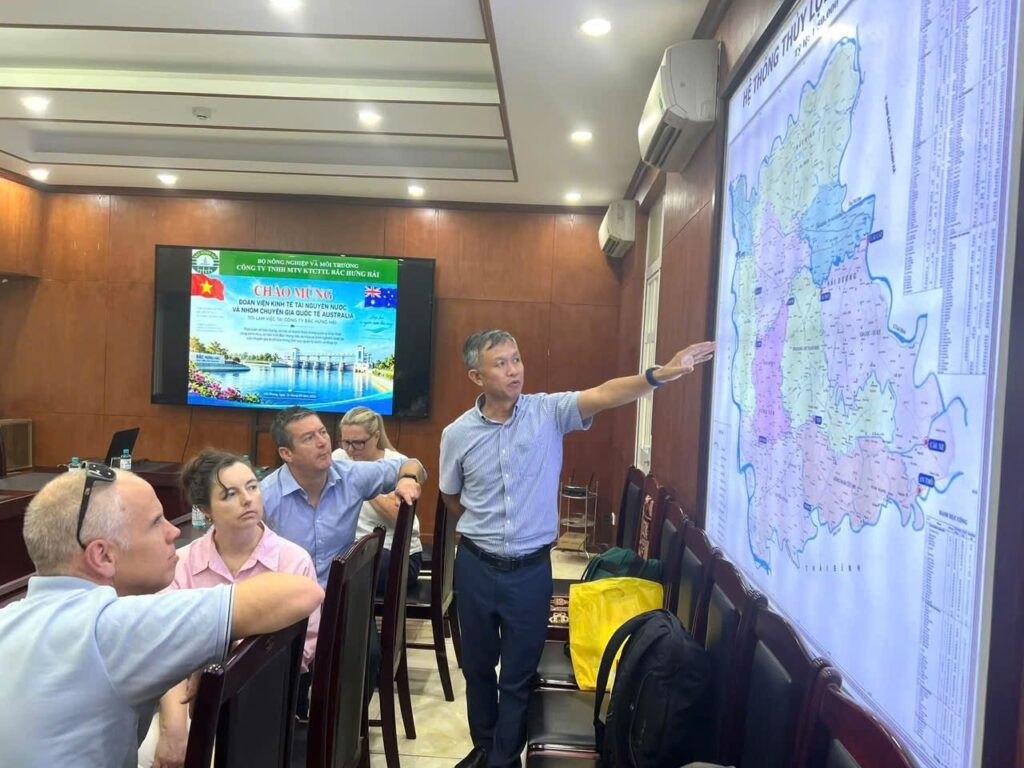
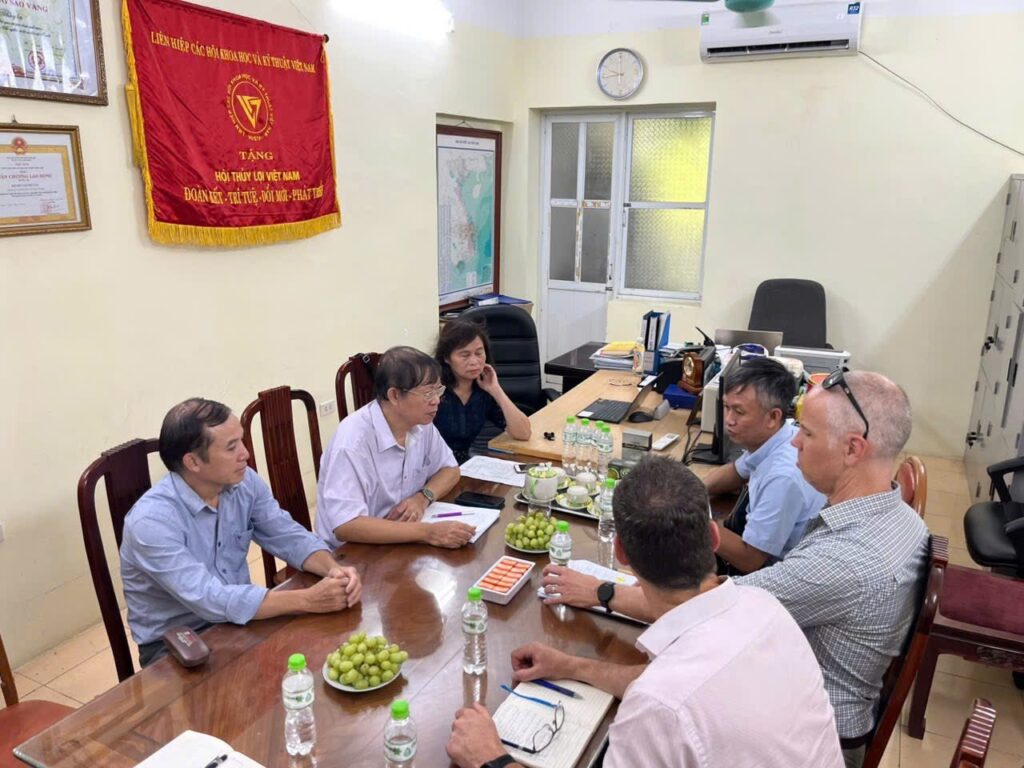
The training and capacity-building programme was successfully completed with positive results. It strengthened professional cooperation between the two countries’ research institutions and contributed to Australia–Vietnam cooperation in water resources governance.